


Tactile Corduroy Tiles (400×400) — DfT-Compliant Hazard Warning
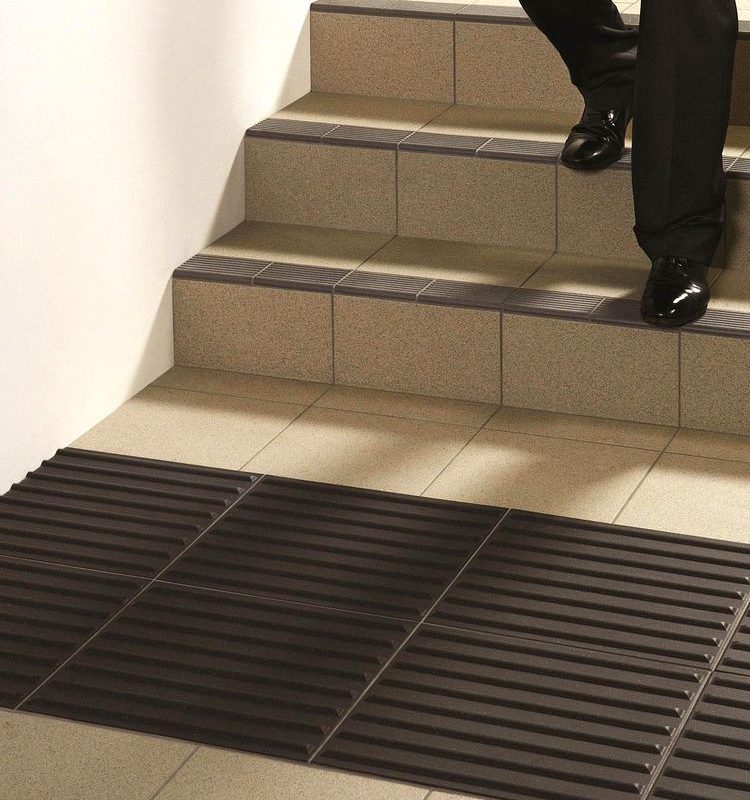
Tactile corduroy tiles warn of hazards such as steps, ramps and level crossings. Our Dorset Woolliscroft porcelain modules (400×400×12.5 mm) in Sand and Anthracite are designed for compliant light-reflectance contrast and long-life slip resistance. Below you’ll find specification, where to use corduroy per DfT 2021 guidance, and how it compares with surface-mounted GRP.
- DfT guidance aligned (2021)
- Sand & Anthracite for LRV contrast
- Slip-resistant, heavy-traffic suitable
- Samples & fast UK delivery
400×400 modules with 8 rounded bars; 6 mm height, 20 mm width, 50 mm centres (per DfT guidance).
Sand (LRV: light)
Warm, high-contrast option against darker paving for compliance.
Anthracite (LRV: dark)
Dark, high-contrast option against lighter surrounding surfaces.
Through-body Porcelain
Dense, durable body for heavy footfall and outdoor exposure.
Quarry Alternative
Traditional aesthetic; check slip values vs project requirements.
Tactile Corduroy
£36.46
An anthracite 400x400mm porcelain tile part of the Dorset Tactile Cordrouy range – both Blister and Corduroy Tactiles contain aggregate throughout the tile body, for exceptional […]
£36.46
About this Dorset Woolliscroft Tactile Corduroy Sand DW-TCSND4040 porcelain tile The Dorset stone Tactile Corduroy is perfect for creating a fresh look to your other, this […]


Why choose corduroy tactile tiles?
- Compliance: Bar geometry and layout aligned with DfT guidance (2021).
- Safety: Clear “hazard — proceed with caution” message for partially sighted users.
- Durability: Porcelain body for heavy-traffic public areas.
- Contrast: Sand and Anthracite enable LRV contrast on most projects.
- Low maintenance: Stain-resistant, frost-proof, easy to clean.
Where corduroy works best
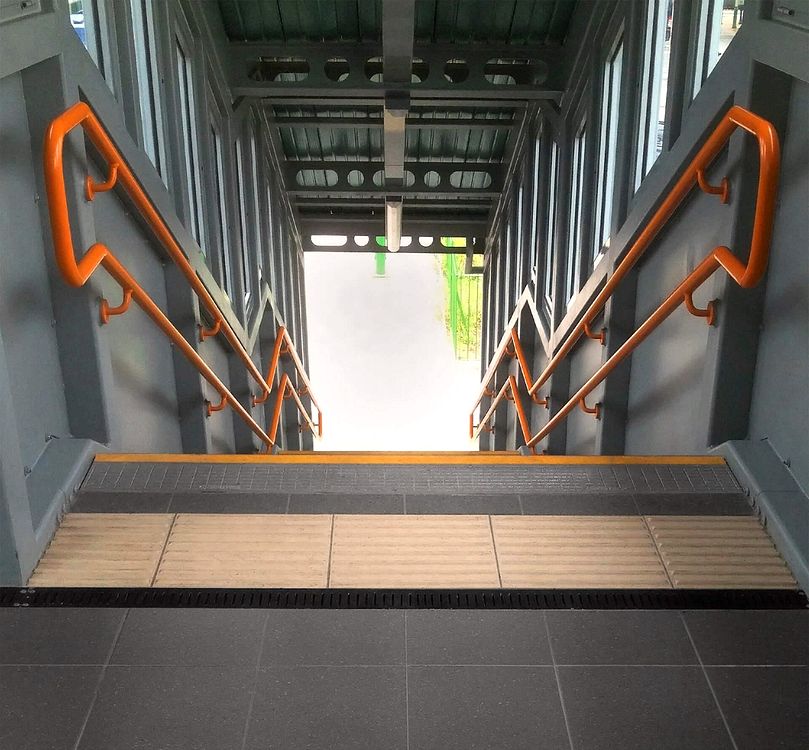
- Top and bottom of stairways to warn of a level change.
- Ramps where gradient begins/ends.
- Level crossings and on-street light rail approaches.
- Where a footway meets a shared route used by cyclists.
Always follow local detail drawings and DfT spacing/field dimensions for compliance.
Corduroy porcelain vs surface-mounted GRP
Installation & layout essentials
- Prepare substrate; ensure falls and drainage are correct.
- Lay modules with bars transverse to direction of travel.
- Follow DfT field dimensions at hazards (stair heads/ramps/crossings).
- Use exterior-grade adhesive/mortar; maintain even 3–5 mm joints.
- Check LRV contrast between field and surrounding paving.
- Finish with anti-slip cleaning and handover documentation.
Ask our team for a one-page method statement and CAD blocks.
Colour & LRV contrast
Use Sand against darker paving and Anthracite against lighter paving to achieve a clear light-dark contrast. For specifiers, we can supply indicative LRV figures and a simple compliance statement on request.
Request LRV statementSamples, delivery & project support
Order free cut samples, arrange fast UK delivery, or send drawings for a quick take-off. Our Kent-based team supports contractors, architects and local authorities.
FAQs
What is corduroy tactile paving?
Corduroy is a detectable warning surface used to signal a hazard or level change, telling pedestrians to proceed with caution. It uses rounded bars in a regular pattern to give a distinct underfoot cue.
Where should corduroy be installed?
Typical locations include the top and bottom of stairs, at ramps, on approaches to on-street light rail, and where a footway meets a shared route. Always follow current DfT dimensions and placement rules.
Are corduroy and blister the same?
No. Blister (domes) is generally used at pedestrian crossings to signal a safe place to cross. Corduroy (bars) signals a hazard or level change.
What is the standard tile size and bar geometry?
Common modules are 400×400×12.5 mm with 8 rounded bars, 6 mm high, 20 mm wide, at 50 mm centres.
How do I achieve colour contrast?
Choose Sand against darker surrounding paving and Anthracite against lighter paving to provide a clear LRV contrast. Request our LRV statement if needed.


